
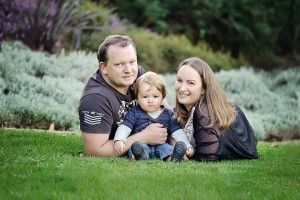
About Jason Gilbert
How Functional Neuro-physiological Integration developed
Functional Neuro-physiological Integration — FNI — did not begin as an attempt to invent another therapy.
FNI became a fundamental realization that all health and wellness needs is a method for changing what organizes the present, without requiring deletion of what created the past.
Instead, it developed gradually through physiology, psychology, engineering, manual clinical training, kinesiology, systems thinking and many years of clinical observation.
Over time, the same questions kept appearing.
Why does one person respond differently from another?
Why can the same person respond differently to the same issue at another time?
What makes a therapeutic response meaningful rather than incidental?
How can subtle changes become observable?
And, most importantly:
How do we know that something has actually changed?
Those questions eventually became the foundation of FNI.
Before healthcare: learning to think in systems
My professional background began in engineering and production rather than healthcare.
I worked across mechanical engineering, production, operations, food manufacturing, precision engineering, industrial technology and medical-device production.
At Fisher & Paykel Healthcare, I progressed through design and production engineering into operations engineering and production management within a regulated medical-device environment.
Those roles taught me to think in systems.
Before you improve a system, you need to understand it.
Before you trust a measurement, you need a reference.
You also need to distinguish normal variation from genuine failure.
Most importantly, a change should survive testing under real operating conditions.
When something went wrong, increasing force was rarely the intelligent answer.
Instead, you went back to the system.
You checked calibration.
You looked for the missing relationship.
Then you changed one thing and tested again.
Years later, I recognised that the same logic had become part of the way I worked clinically.
Physiology and psychology
My formal academic foundation includes a Bachelor of Science in Physiology and Psychology.
That combination became increasingly important.
Physiology asks how the body regulates, senses, moves and adapts.
Psychology asks how people perceive, learn, remember, interpret and respond.
In clinical practice, however, these two domains rarely appeared completely separate.
A memory could alter breathing.
A thought could change posture.
An imagined situation could produce an immediate physical response.
Likewise, a physical position could change how something was experienced.
Attention could change the response again.
As a result, I became increasingly interested in the relationships connecting physical and psychological experience rather than treating them as isolated systems.
Chiropractic clinical training
I later undertook extensive chiropractic education at the New Zealand Chiropractic College.
I completed four years of the five-year chiropractic programme and progressed through the final clinical stage before leaving the programme.
Although I did not complete the chiropractic degree, those years provided substantial education in anatomy, neurology, biomechanics, examination, manual assessment and clinical reasoning.
They also reinforced an idea that continued to influence my work:
the nervous system, sensory input, movement and physical structure continually interact.
My later clinical work explored that relationship in increasing detail.
Kinesiology and specialised clinical training
Alongside this foundation, I trained in several kinesiology and mind–body approaches.
These included Total Body Modification (TBM), concepts associated with Applied Kinesiology, PSYCH-K, and other manual and behavioural approaches.
I trained in TBM with Dr Kevin Millet and also received clinical mentorship from Dr William Donaldson, an experienced chiropractor and TBM instructor.
These systems contributed techniques, observations and different ways of asking clinical questions.
However, simply combining those systems did not create FNI.
Instead, FNI emerged from patterns that remained consistent when I compared different techniques, explanations and patient responses.
For that reason, provenance remains important.
Where FNI uses a method that originated elsewhere, that origin should remain acknowledged.
FNI should not claim ownership of techniques developed by other systems.
Total Health Kinesiology
I founded Total Health Kinesiology and have spent more than fifteen years working clinically with people presenting with a wide range of concerns and life experiences.
Over time, the clinical work became an extended process of observation and refinement.
Certain patterns appeared repeatedly.
A person’s response could change rapidly when a relevant subject entered attention.
Often, the physical change was subtle rather than a dramatic loss of strength.
Some changes appeared before the person had much time to consciously analyse the subject.
At other times, changes in breathing, posture, movement, sensation, imagery, thought or emotion appeared alongside the muscle response.
Importantly, a response that initially seemed significant could disappear after another relationship changed.
Gradually, one principle became increasingly clear:
the most useful information was often not the symptom itself, but the relationship surrounding it.
That observation became central to FNI.
From muscle testing to calibration
Traditional descriptions of kinesiology often focus on whether a muscle is “strong” or “weak”.
That description became too limited for what I was observing.
The useful clinical difference was more subtle.
I was observing an immediate change in resistance or compliance. I compared that change with the person’s own calibrated state.
This raised another question.
If the reference state itself was unstable, how could I interpret the response?
That question led to one of the central principles of modern FNI:
Qualification precedes calibration.
Calibration precedes interpretation.
Before asking what a response means, the system first needs to be stable enough to measure.
For this reason, modern FNI begins with the FNI Pre-Screen, followed by FNI Calibration, before moving into the recursive session.
The FNI Pre-Screen
Over time, I noticed that some people arrived with observable movement or sensorimotor patterns already present.
Eye tracking might appear restricted.
The eyes and head might not move smoothly together.
Sometimes the whole body substituted for a smaller movement.
In other cases, jaw movement appeared during eye tracking.
Other unexpected paired movements also appeared.
A finding that seemed clear while someone was lying down could also change when they sat or stood.
These observations led to the development of the FNI Pre-Screen.
Its purpose is not to diagnose disease from posture or eye movement.
Instead, it asks a simpler question:
Is the system organised well enough to provide a meaningful reference?
Only after that question is adequately answered does formal FNI calibration begin.
From isolated responses to a multiplex
Manual Muscle Testing remains the primary continuous feedback channel during an FNI session.
However, years of observation showed that the MMT response rarely exists in complete isolation.
At different times, a person may also show changes in breathing, posture, body position, spontaneous movement, facial expression or swallowing.
They may notice changes in muscle tension, temperature, internal sensation, pain, thought flow, attention, imagery or emotion.
These responses are not required.
They also do not act as separate truth detectors.
Instead, they can add coherence to an observed state change when they appear.
This became the FNI MMT Multiplex model:
Navigate with the continuous MMT channel; increase coherence with other independent channels when available.
Making intangible relationships tangible
Another recurring observation was that important experiences were not always represented through words alone.
A person might experience something as near or far.
It might feel inside or outside, connected or separate, large or small.
It may seem round, angular, warm, cold, light, dark, compressed, expanded, moving or still.
Sometimes colour appears.
Sometimes pressure.
Sometimes emotion.
Occasionally an image appears that makes little logical sense.
Rather than dismissing these experiences, FNI can use them as temporary representations of relationship.
However, FNI does not automatically treat them as literal structures or universal symbols.
Their value is practical.
They can provide enough structure to make an otherwise intangible relationship easier to explore.
This led to another important principle:
The map is not the territory.
Later, this became:
Minimise the lens, not the landscape.
The person’s complete history does not need to collapse into one explanation.
Instead, FNI seeks only enough information to work with the relationship that matters in the current moment.
Why FNI became recursive
My systems and engineering background also reinforced the importance of verification.
It is easy to perform an intervention.
That does not prove that the intervention worked.
For this reason, FNI gradually developed around a recursive loop:
calibrate → identify → test → correct → replay → verify → reassess
The original stimulus matters.
If something changed the calibrated response before an intervention, FNI returns to the same relationship afterwards.
This produced another central rule:
An intervention is not the same thing as a verified change.
FNI must reassess the original condition.
If the expected result does not occur, the system does not simply assume that more treatment is necessary.
Perhaps the model is incomplete.
Perhaps the wrong relationship became the focus.
Another variable may still be active.
Alternatively, the testing state itself may need recalibration.
Therefore:
When the correction fails, question the model before forcing the outcome.
From “subconscious truth” to state-dependent response
Earlier kinesiology traditions often described muscle testing as a way to access subconscious information.
My current position is more conservative.
People clearly have memories, learned associations, conditioned responses and physiological reactions that can occur without deliberate conscious control.
However, a changed muscle response does not prove that a statement is objectively true.
It shows that something about the stimulus appears to have changed the measured state relative to the person’s calibrated reference.
The FNI reasoning sequence is therefore:
response → pattern → question → hypothesis → cross-check → reassessment
rather than:
response → truth.
This distinction has become increasingly important as FNI has matured.
Centred, grounded and embodied
FNI eventually required a consistent reference against which change could be considered.
Within the clinical model, this reference is described as:
centred, grounded and embodied.
FNI represents this conceptually as a three-axis reference point — (0,0,0).
The coordinate does not represent emptiness or a mystical location.
Instead, it provides a clinical reference frame for the highest available present-moment stability within the FNI model.
From that reference, FNI can explore how different experiences relate to the person’s current state.
The goal is not to erase memory, emotion or individuality.
Instead, the question is whether the relationship to an experience can become less disruptive and more integrated.
What makes FNI multidisciplinary?
FNI draws insight from several disciplines because human response does not divide itself neatly into professional categories.
Relevant areas include physiology, psychology, sensorimotor science, manual therapy, chiropractic principles and kinesiology.
FNI also draws on ideas from motor control, learning and conditioning, spatial cognition, attention, imagery and mind–body approaches.
However, FNI is not simply a collection of techniques from different systems.
Its deeper organising principles are:
assessment
calibration
relationship
minimum sufficient intervention
feedback
reassessment
and
verification.
These principles determine how the different components fit together.
Preserving provenance
As FNI developed, I became increasingly aware of the need to distinguish several different sources of knowledge.
Some observations arose independently during my own clinical work.
Other techniques came from established systems in which I had trained.
Later, scientific literature helped clarify possible parallels or mechanisms.
Some ideas still remain hypotheses.
Keeping these categories separate matters.
If I later find a similar idea in another field, that similarity does not mean the earlier FNI observation came from that source.
Likewise, a clinical observation does not become scientifically proven simply because related research exists.
For this reason, modern FNI tries to preserve provenance carefully.
Similarity can strengthen a research question.
It does not rewrite history.
Engineering and clinical reasoning meet
Looking back, FNI reflects many of the systems principles I learned before entering clinical practice.
In engineering, a measurement requires calibration.
A system also has operating conditions.
Small changes can move through connected systems.
Noise must be separated from signal.
Sometimes failure points to a bad model rather than a bad machine.
Interventions should therefore remain controlled.
Finally, a result needs to survive retesting.
FNI applies a similar logic in a different domain.
First, the patient undergoes qualification.
Next, the testing system is calibrated.
A controlled stimulus then enters the process.
The practitioner observes the response and explores the minimum relevant relationship.
After correction, FNI replays the original condition and reassesses the result.
The domains are different.
However, the underlying logic is remarkably similar.
Sixteen years of refinement
FNI has developed through approximately sixteen years of clinical observation and progressive refinement.
The current system is much more structured than its early versions.
Some concepts remained useful.
Others changed substantially.
Over time, more precise language replaced several earlier explanations.
Some proposed mechanisms still remain uncertain.
That evolution is deliberate.
A clinical system should change when better observation, stronger evidence or clearer reasoning requires it.
Therefore, I do not treat FNI as finished doctrine.
I treat it as a developing system.
Where FNI is now
Modern FNI has three broad stages.
FNI Pre-Screen
The Pre-Screen assesses whether important sensorimotor, movement or contextual patterns need attention before formal calibration.
FNI Calibration
Calibration establishes a sufficiently stable reference from which subtle changes can be observed.
FNI Recursive Session
The recursive session uses gentle MMT as its principal navigation channel.
It then explores the minimum relevant relationship, applies an indicated correction, replays the original stimulus and verifies what changed.
The simplified sequence is:
Pre-Screen → Calibration → Navigation → Correction → Verification
Where FNI is going
The next stage in FNI development is not simply more clinical explanation.
It is measurement.
Several questions now matter.
Can we objectively measure the FNI muscle response?
Can trained practitioners reproduce it?
Can blinded testing distinguish relevant stimuli from neutral controls?
Can experiments separate correction effects from spontaneous recovery?
Do other physiological or postural measurements change at the same time?
Can another trained practitioner reproduce the complete process independently?
And ultimately:
Does FNI produce meaningful and durable outcomes beyond appropriate comparison conditions?
These questions provide a pathway from clinical observation toward formal research.
Clinical experience is not the same as scientific proof
I have observed changes during clinical practice that I consider significant.
Those experiences are part of why I continued developing FNI.
However, patient experience, practitioner observation and scientific evidence are different categories.
Clinical observation can tell us:
something worth investigating may be happening.
Research must then ask:
what changed, whether it is reproducible, why it changed, and whether the intervention caused it.
FNI now builds that distinction directly into its model.
Why continue developing FNI?
A fundamental clinical question remains.
People experience relationships among thoughts, memories, movement, sensation, emotion and physiology that can feel very real but remain difficult to measure.
What happens if those state changes become more observable?
What happens if we can reproduce them?
Can we distinguish relevant stimuli from irrelevant ones?
Can we separate intervention effects from expectation or spontaneous recovery?
And can independent practitioners reproduce the same findings?
If those questions produce reliable answers, there may be something useful to understand.
That is where FNI is now heading.
About Jason Gilbert
Jason Gilbert is the founder of Total Health Kinesiology and the developer of Functional Neuro-physiological Integration.
His background spans physiology and psychology, extensive chiropractic clinical education, specialist kinesiology and mind–body training, long-term clinical practice, engineering, production, operations and systems management.
Together, those experiences shaped an approach that places particular emphasis on:
calibration;
feedback;
relational structure;
failure detection;
minimum necessary intervention;
and
verification.
The long-term objective is increasingly straightforward.
Rather than asking people to accept FNI because of its history or philosophy, the goal is to:
define the method clearly enough to teach;
measure it precisely enough to test;
and change it when better evidence requires change.
Explore Functional Neuro-physiological Integration
To understand the clinical system itself:
Read: What is Functional Neuro-physiological Integration?
To explore its scientific foundations, limitations and proposed research:
Read: FNI Research & Evidence
For practical questions about appointments and the FNI process:
Read: FNI Frequently Asked Questions
To arrange a session:
Book an FNI Session
Functional Neuro-physiological Integration
Observe carefully.
Calibrate before interpreting.
Change the minimum necessary relationship.
Retest what originally changed.